Vegan (or faux) leather has been on a run again, in its campaign to push out the use of genuine leather in fashion and furniture-making. There are many reasons for this, from public opinion on the ethics of producing genuine leather to the price, which is frankly unaffordable for most people. So, of course, people with ethical concerns or just empty wallets would turn to faux leather as an alternative.
However, there are downsides and even concerns about nature preservation. Starting with its environmental impact, most of these cheap faux leathers you find at H&M or Home Goods are made of Polyvinyl Chloride (PVC), which, if you’re unaware, is a plastic made from natural gas. Already, oil production is an unsustainable resource that causes significant air pollution and sometimes irreparable damage to animal habitats, taking up large areas of land and essentially displacing animals from their homes. That’s just the beginning. After these plastic products are made, you might think, given common knowledge that plastics don’t erode like more natural materials (this also goes for faux furs), that they would last longer, but they don’t. I’m going to provide an example that I know deeply from experience: leather jackets. My mom owns a genuine leather jacket, and I own a faux vinyl jacket. My mom has had that jacket since around 2016 (10 years), and I have had mine since 2020 (6 years). Mine has already started peeling and showing what I can only assume is dry rot. I don’t even throw this thing in the wash. I love it so much; I occasionally hand-wash it when it gets stinky. Then there’s my mom throwing hers in the wash like once a month, and it’s perfectly fine. Then, from the perspective of someone who lives relatively far north, the vinyl becomes extremely brittle and cracks almost as soon as it dips into the negatives.
*not my jacket*
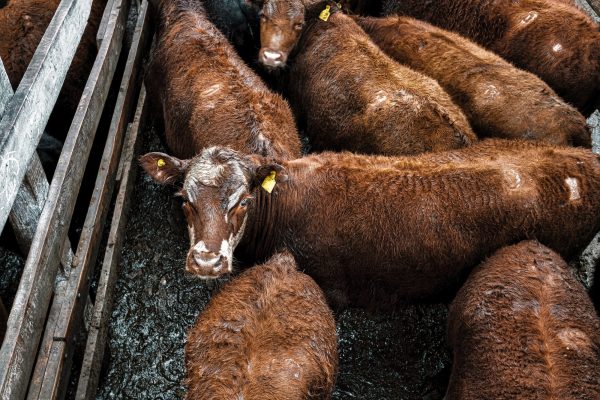
Faux leather can’t go toe-to-toe with genuine leather in terms of quality or durability. It is fast fashion; almost by design, it wears out fast, and when it’s basically withering away in the first couple of years, it ends up in the landfill, becoming the microplastics that haunt our ecosystems. Plus, on a purely aesthetic level, faux leather doesn’t have the same weight and drape as genuine leather. It’s just not good. However, on the opposing side, I can’t 100% stand for genuine leather either, because wherever there’s money, there’s almost always corruption. In their case, if their livestock are not given proper lives (poor environmental or food quality), the ethical quality of the livestock is entirely dependent on the rancher.
As for a solution for both of these, I have heard of biodegradable plant-based leathers. I can’t speak to its quality, for I have never personally owned a piece like that. That, hypothetically, would solve a lot of problems I have with artificial leathers, if they didn’t seal it with (PC), like some other “biodegradable” products.
“What can I do?” You may be asking. For now, research the leather companies and ranchers they buy from. Or you can buy new or vintage pieces from thrift stores! Nothing is 100% ideal, but we’ll find something genuinely good someday, because I doubt leather will ever go out of style.